
Imagine crawling into bed at the end of the day. You are warm. You’re comfortable. You are ready to doze off. But then your brain decides to ask some questions. Did I remember to lock the front door? Did I forget to turn off the kitchen lights? Is the garage door closed?
In a traditional house that’s not equipped with smart home automation, answering your questions requires getting out of bed and walking through your home. But if you have a smart home where every device is integrated within a unified ecosystem, you do not need answers to your questions. You only need to speak a single command.
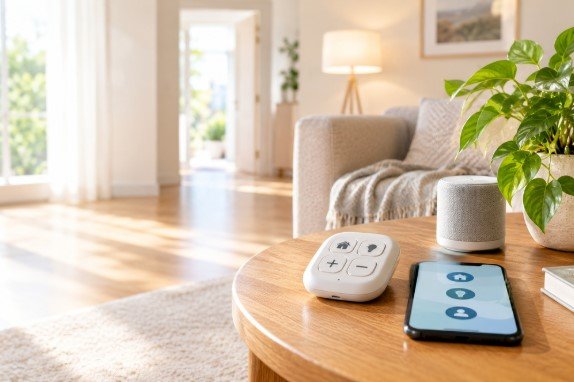
That’s the beauty of hands-free voice control. You can trigger any routine you program into your home automation system with your voice. You just need a smart speaker that integrates with your system. Get one, and you’ll quickly discover how awesome voice control can be.
Move Beyond Music and Timers
Smart speakers are neither new nor hard to find. An estimated 72 million were in use across the U.S. in 2025. The thing is that most consumers use them to do basic things like play music and set alarms. People use their smart speakers to check sports scores, get weather reports, and ask basic questions that can be searched online.
But what if you could do more? What if you could use your smart speaker to control your home automation system? You can. Here are just three examples:
1. Just Say “Good Night”
The experts at Vivint say the key is creating routines that suit your lifestyle in unique ways. They should know, given that they are one of the nation’s leading home automation and security providers. An example they offer is a nighttime routine that locks all the doors, turns off all the lights, and adjusts the thermostat.
With a good routine and a smart speaker in your bedroom, you can say something as simple as “Good night, Jeeves” as you climb into bed. Your system immediately runs the routine. That’s it. No more wandering around the house, locking up and turning things off.
2. Hands-Free Status Checks
Vivint says it is also possible to use a smart speaker to check the status of your system or individual devices. Let’s say you have a smart garage door controller. You can simply ask your smart speaker if the garage door is open or closed. It provides an answer by checking the sensor state and reporting back to you. And by the way, a simple command can close the garage door if you left it open.
3. Instant Emergency Responses
One of the most important benefits of voice control is being able to respond immediately in the event of an emergency. Let us say you hear a strange noise outside your house. With a single voice command, you can arm your alarm system and turn on strategic lighting. Speaking is a lot faster than hunting for your phone or running to a central hub to do what needs to be done.
The one caveat here is matching your smart speaker and home automation system. Both have to be compatible. If you’re building your own DIY system, perhaps start with a smart speaker and then buy devices compatible with it. If you are buying a package from a provider like Vivint, just ask which smart speakers the system is compatible with.
As a home automation user with two smart speakers, I can tell you they have changed everything. Once you get used to voice control, you’ll never want to go back to doing things manually.