
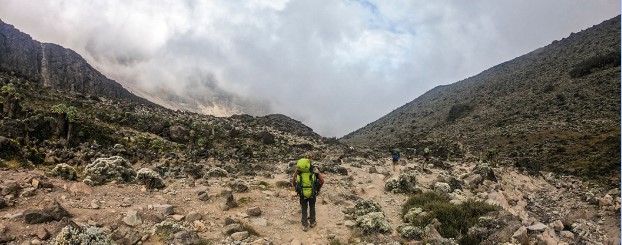
Standing at the crossroads of adventure and achievement, Mount Kilimanjaro beckons to those seeking more than ordinary travel experiences. This magnificent stratovolcano, piercing the East African sky at 5,895 meters, represents humanity’s gateway to extreme altitude without the barriers of technical mountaineering. To climb Mount Kilimanjaro is to embark on a week-long journey that compresses a lifetime of landscapes, challenges every physical and mental limitation, and ultimately rewards perseverance with views from the top of Africa. Whether you’re an experienced adventurer or a determined novice, understanding the nuances of Kilimanjaro climbing transforms aspirations into accomplishments and dreams into documented reality.
The Kilimanjaro Phenomenon: Understanding What Makes This Mountain Unique
Mount Kilimanjaro exists as a geographic and experiential anomaly. While most high peaks cluster within mountain ranges sharing atmospheric conditions and ecological characteristics, Kilimanjaro rises in splendid isolation from the Tanzanian plains. This independence creates a mountain with personality, generating its own weather systems, supporting unique ecosystems, and presenting challenges distinct from any other global peak.
The mountain’s volcanic origins shape everything about the climbing experience. Formed through three eruptive centers—Shira, Mawenzi, and Kibo—over the past million years, Kilimanjaro’s layers of lava, ash, and pumice create the trails you’ll ascend. While Shira collapsed into a plateau and Mawenzi eroded into jagged spires, Kibo remains intact as a dormant volcano whose crater rim holds Uhuru Peak, your ultimate destination.
When you climb Mount Kilimanjaro, you’re experiencing what geologists call a “sky island”—an ecological realm isolated by altitude much as oceanic islands are isolated by water. Species here evolved in isolation, creating plants and animals found nowhere else on Earth. The giant groundsels and lobelias that dot the moorlands represent evolutionary experiments in high-altitude survival, their bizarre forms adapted to extreme temperature swings and intense ultraviolet radiation.
The human element enriches Kilimanjaro’s character. Local Chagga communities have lived on the mountain’s fertile lower slopes for centuries, developing sophisticated agricultural systems utilizing volcanic soil and reliable rainfall. Your climb directly impacts thousands of families depending on tourism for livelihoods—guides passing knowledge across generations, porters supporting families through physically demanding work, and communities benefiting from park fees funding infrastructure and conservation.
The Seven Routes Decoded: Finding Your Perfect Path
Kilimanjaro offers seven official routes, each presenting a distinct personality, challenge level, and experience. Selecting wisely based on your priorities, capabilities, and resources fundamentally shapes your journey.
Machame Route: The Balanced Classic Earning its “Whiskey Route” nickname through challenging terrain compared to the easier “Coca-Cola” Marangu route, Machame attracts roughly half of all Kilimanjaro climbers. This six to seven-day journey balances accessibility with adventure, delivering 80-85% success rates through excellent acclimatization profiles. You’ll traverse lush rainforest, cross the expansive Shira Plateau, scramble up the iconic Barranco Wall (thrilling but non-technical), and approach the summit via Stella Point. While popularity means crowded camps, it also ensures well-maintained trails, experienced guides, and the camaraderie of fellow climbers sharing your journey.
Lemosho Route: The Scenic Premium Choice For those prioritizing experience over budget, Lemosho delivers Kilimanjaro’s finest wilderness adventure. Beginning at the remote western trailhead, this seven to eight-day trek maintains lower traffic during initial days while providing unmatched scenic variety. You’ll witness Kilimanjaro from constantly changing perspectives as the route arcs across the mountain’s western and southern flanks. The extended itinerary enables gradual elevation gain perfect for altitude adaptation, explaining consistent 90%+ success rates. Lemosho represents the thinking climber’s choice—paying premium prices for superior acclimatization and reduced environmental and social impact through lower crowds.
Northern Circuit: The Ultimate Experience Representing Kilimanjaro’s longest and newest established route, the Northern Circuit takes eight to nine days circumnavigating the mountain. You’ll experience the peak from every cardinal direction—south, west, north, and east—each angle revealing different geological features, ecological zones, and visual drama. The extended duration provides optimal acclimatization, yielding success rates approaching 95%. Northern Circuit’s length and cost limit traffic, ensuring peaceful wilderness experiences unavailable on shorter routes. Choose this route when maximizing summit probability justifies the time and financial investment.
Rongai Route: The Northern Alternative Ascending from the drier northern slopes near Kenya, Rongai follows a more gradual gradient than western routes while experiencing less precipitation. This seven-day trek suits those seeking quieter trails, preferring steady climbs over dramatic elevation changes, or attempting Kilimanjaro during rainy seasons when northern slopes receive less moisture. However, Rongai’s scenery lacks the diversity of western approaches, and its acclimatization profile doesn’t match Lemosho’s effectiveness. Success rates hover around 75-80%, respectable but not exceptional. Select Rongai for April-May attempts or when solitude outweighs scenery concerns.
Umbwe Route: The Steep Challenge Kilimanjaro’s steepest, most direct route, Umbwe ascends aggressively through pristine forest before joining Machame near Barranco Camp. This six-day challenge attracts experienced trekkers seeking maximum difficulty and minimum crowds. The route’s beauty lies in dramatic forest sections and exposed ridges providing breathtaking views. However, rapid elevation gain compromises acclimatization, resulting in 60-70% success rates. Only confident high-altitude veterans should consider Umbwe—it demands experience, fitness, and mental fortitude beyond typical Kilimanjaro routes.
Marangu Route: The Hut Experience As Kilimanjaro’s oldest tourist route and only option offering hut accommodations, Marangu attracts those prioritizing comfort over camping adventure. Dormitory-style sleeping arrangements, dining huts, and established infrastructure create civilized mountain experiences. Unfortunately, typical five to six-day itineraries provide insufficient acclimatization, explaining disappointing 60-65% success rates. However, seven-day Marangu schedules incorporating extra acclimatization days transform the route’s effectiveness, achieving respectable 75-80% success rates. Choose Marangu only with extended itineraries or when camping is absolutely unacceptable.
Mweka Route: Descent Only Mweka serves exclusively as the primary descent route for Machame, Lemosho, Umbwe, and Shira climbers. This direct, well-maintained trail rapidly loses elevation through rainforest zones, allowing exhausted summiteers to reach lower altitudes quickly. You won’t choose Mweka for ascent, but you’ll appreciate its efficiency when descending after summit success.
Training Philosophy: Building Your Kilimanjaro-Ready Body
Successfully climbing Mount Kilimanjaro requires transforming your body into an efficient altitude-trekking machine through systematic, progressive training. This preparation extends beyond simple fitness to encompass endurance, strength, technique, and mental resilience.
The Foundation Phase (Months 1-2 Before Departure) Establish cardiovascular base fitness through consistent aerobic exercise. Commit to five to six weekly sessions of 45-60 minutes each, maintaining moderate intensity where conversation remains possible but singing becomes difficult. Activities include hiking (most relevant), running, cycling, swimming, or rowing. This phase develops aerobic capacity, strengthens cardiac output, increases lung efficiency, and builds work capacity for subsequent training intensification.
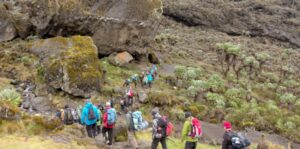
Simultaneously begin basic strength training twice weekly. Focus on fundamental movements: bodyweight squats developing leg strength, lunges building unilateral stability, planks creating core endurance, and basic back exercises like rows establishing postural strength. Perfect technique before adding weight—proper movement patterns prevent injuries while maximizing training effectiveness.
The Build Phase (Months 3-4 Before Departure) Increases training volume and intensity systematically. Extend weekend hikes to four to six hours, actively seeking elevation gain whenever geography permits. If living in flat areas, substitute stair climbing, stadium steps, or parking garage ramps for hill training. Begin hiking with weighted packs starting at 5 kilograms, progressively increasing to 7-8 kilograms matching expected Kilimanjaro daypack weight.
Add interval training once or twice weekly to build high-intensity capacity. Alternate three-minute hard efforts (where speaking becomes difficult) with three-minute recovery periods, repeating six to eight cycles. This training improves your body’s ability to process oxygen efficiently—critical for altitude performance.
Advance strength training by adding external load. Perform goblet squats holding dumbbells, walking lunges with weights, single-leg Romanian deadlifts developing balance and posterior chain strength, and weighted step-ups directly mimicking climbing movements. Maintain core work through planks, side planks, dead bugs, and bird dogs building the stability that maintains efficient movement under fatigue.
The Peak Phase (Weeks 5-10 Before Departure) Reach maximum training volume with eight-hour weekend hikes simulating summit day duration and intensity. Practice back-to-back training days (hiking both Saturday and Sunday) replicating consecutive trekking days. Continue midweek training with one interval session building intensity capacity, two moderate endurance sessions maintaining base fitness, and two strength sessions preserving muscular power.
Dedicate training to downhill technique—the commonly overlooked skill causing most trekking injuries. Practice descending with proper form: trekking poles planted ahead distributing forces away from knees, landing mid-foot rather than heel-striking which jars joints, maintaining slight knee bend absorbing impact, and engaging core keeping upper body stable. Strong eccentric muscle control (lengthening under tension) prevents the burning quad sensation making descents miserable and injury-prone.
The Taper Phase (Final 2 Weeks Before Departure) Reduce training volume by 40-50% while maintaining intensity in remaining sessions. This strategic recovery allows accumulated fatigue to dissipate while preserving hard-earned fitness adaptations. Your final week should feature only light activity—gentle walks, easy stretching, adequate sleep. Arrive at Kilimanjaro fresh and energized rather than exhausted from excessive last-minute training.
Altitude Mastery: The Physiological Chess Game
Successfully navigating altitude represents the defining challenge when you climb Mount Kilimanjaro. Understanding your body’s responses to reduced oxygen availability enables strategic decision-making maximizing summit probability while maintaining safety.
At sea level, atmospheric pressure of approximately 101 kPa delivers abundant oxygen with every breath. Your blood achieves 95-100% oxygen saturation effortlessly. At Uhuru Peak’s 5,895 meters, atmospheric pressure plummets to roughly 48 kPa—each breath provides only 47% as much oxygen. Even with perfect acclimatization, summit oxygen saturation typically falls to 70-80%, creating the sensation of perpetual breathlessness.
Your body deploys multiple strategies compensating for reduced oxygen availability. Immediate responses include increased breathing rate (hyperventilation at altitude feels normal), elevated heart rate pumping oxygen-depleted blood faster, and enhanced blood flow to vital organs prioritizing brain and heart function. Over days to weeks, your body produces additional red blood cells carrying more oxygen per circulation, increases capillary density improving oxygen delivery to tissues, and modifies cellular metabolism extracting more energy from available oxygen.
These adaptations require time—specifically, approximately 24-48 hours per 500 meters of elevation gain above 3,000 meters. Attempting to climb Mount Kilimanjaro faster overwhelms your adaptive capacity, triggering a cascade of altitude-related problems.
Understanding Altitude Illness Progression Mild Acute Mountain Sickness (AMS) affects approximately 75% of Kilimanjaro climbers at some elevation. Symptoms include headache, nausea, dizziness, fatigue, and sleep disturbance. These unpleasant but manageable symptoms typically resolve with rest, hydration, and slower ascent. Continuing upward despite symptoms risks progression to dangerous conditions.
Moderate AMS involves worsening symptoms—severe headache unrelieved by medication, persistent vomiting preventing hydration and nutrition, increasing weakness making walking difficult, and coordination problems. This stage demands serious concern and potential descent.
Severe altitude illness manifests as High Altitude Pulmonary Edema (HAPE) where fluid accumulates in lungs causing extreme breathlessness, coughing (sometimes producing frothy pink sputum), chest tightness, and inability to lie flat. High Altitude Cerebral Edema (HACE) involves dangerous brain swelling producing severe headache, confusion, loss of coordination (ataxia), altered consciousness, and potentially coma. Both HAPE and HACE represent medical emergencies requiring immediate descent—the only reliable treatment.
Strategic Acclimatization Protocols Ascent Rate Management: Follow the mountaineering adage “climb high, sleep low.” Daily excursions to higher elevations followed by returns to lower camps for sleeping accelerate adaptation through controlled exposure and recovery cycles.
Hydration Discipline: Consume three to four liters daily despite reduced thirst sensation at altitude. Adequate hydration maintains blood volume, improves oxygen transport, and reduces AMS risk. Monitor urine color as hydration indicator—pale yellow indicates adequacy while dark concentrated urine signals dangerous dehydration.
Nutritional Strategy: Prioritize carbohydrate-rich foods your body metabolizes most efficiently using limited oxygen. Pasta, rice, potatoes, bread, oatmeal, and simple sugars provide optimal fuel at altitude. Don’t worry about balanced nutrition during the climb—focus on consuming sufficient calories even as appetite diminishes.
Breathing Techniques: Practice pressure breathing during summit push—forcefully exhaling against pursed lips creates positive pressure maintaining alveolar inflation and improving oxygen exchange. Some climbers find rhythmic breathing (coordinating breaths with steps) helps maintain pace and prevents hyperventilation.
Pharmacological Assistance: Acetazolamide (Diamox) accelerates acclimatization by stimulating breathing and reducing fluid accumulation. Typical prophylactic dosing begins 125-250mg twice daily starting one day before ascent. Consult physicians experienced in altitude medicine to determine appropriateness for your circumstances, and trial medication weeks before departure identifying potential side effects.
Essential Gear Decisions: Equipment That Makes or Breaks Your Climb
Strategic gear selection dramatically impacts your comfort, safety, and summit probability. Kilimanjaro’s environmental extremes—from tropical heat and humidity to arctic cold and wind—demand versatile, quality equipment.
Sleep System Optimization Your sleeping bag represents arguably your most important gear investment. Four-season bags rated to -15°C absolute minimum prove essential, with -20°C ratings providing security margins for abnormally cold conditions or cold-sensitive individuals. Down insulation offers unmatched warmth-to-weight ratios and compressibility—a 700-800 fill power down bag provides excellent performance. Synthetic insulation maintains warmth when wet, important in rainforest camps where moisture penetrates everything. Consider hybrid bags combining down bodies with synthetic footboxes preventing moisture-induced cold feet.
Sleeping bag liners add 5-10°C warmth while keeping bags cleaner. Silk liners minimize weight and bulk; fleece liners maximize warmth. Sleeping pads with R-values exceeding 4.0 insulate you from frozen ground—conductive heat loss through inadequate pads ruins sleep quality and compromises recovery.
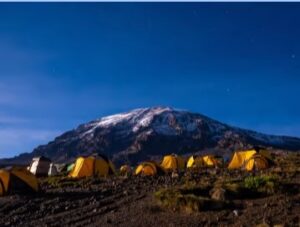
Layering System Architecture Effective clothing follows strict layering principles maximizing versatility across extreme temperature ranges. Base layers directly contacting skin must wick moisture away from the body while providing light insulation. Choose merino wool (temperature regulating, odor resistant, comfortable) or synthetic technical fabrics. Never wear cotton—it absorbs moisture, loses insulation when wet, and dramatically increases hypothermia risk.
Mid-layers provide primary insulation by trapping warm air. Fleece jackets offer reliability, quick-drying properties, and continued insulation even when damp. Lightweight down jackets provide superior warmth-to-weight ratios for evening camp wear and summit layers. Bring multiple mid-layers allowing temperature regulation through adding or removing layers.
Shell layers protect against wind and precipitation while allowing vapor escape preventing internal condensation. Invest in quality waterproof-breathable jackets and pants featuring adequate ventilation, storm hoods, and durable construction. These outer layers transform from barely noticed during pleasant weather to lifesaving during summit night storms.
Footwear Foundation and Care Well-broken-in waterproof hiking boots with Gore-Tex or equivalent membranes form your literal foundation. Boots must provide ankle support preventing sprains on uneven terrain, accommodate thick socks plus potential foot swelling at altitude, and maintain waterproofing through rainforest mud and summit snow. Break boots in thoroughly during training—at least 100 kilometers—preventing blisters that end climbs prematurely.
Sock systems matter enormously. Wear thin liner socks (synthetic or merino wool) wicking moisture away from skin, plus thick outer socks (merino wool or synthetic blends) providing cushioning and insulation. This two-sock system reduces friction preventing blisters while managing moisture and maintaining warmth.
Gaiters prevent scree, mud, water, and snow from entering boots—essential equipment rather than optional accessories. Lightweight camp shoes or sandals provide evening relief allowing boots to dry overnight while resting feet from boot confinement.
Technical Equipment Essentials Quality adjustable trekking poles reduce knee impact forces by approximately 25% during descents while providing stability on uneven terrain, balance during stream crossings, and rhythm during ascents. Carbon fiber poles offer light weight; aluminum poles provide durability at lower cost. Proper adjustment matters—plant poles with elbows forming 90-degree angles.
Reliable headlamps with fresh batteries (lithium performs better in extreme cold) provide essential lighting during pre-dawn summit attempts. Bring spare batteries and backup headlamp—darkness on summit night with failed lighting creates genuinely dangerous situations. Test all equipment before departure ensuring proper function.
High-SPF sunscreen (50+), UV-protection sunglasses or goggles, and wide-brimmed hats prevent severe sunburn from intense equatorial sun amplified by reflective snow at altitude. Sun damage has ended climbs through painful burns making pack-carrying agonizing.
Cultural Engagement and Ethical Climbing
When you climb Mount Kilimanjaro, you enter a complex cultural and economic ecosystem where your choices directly impact local communities. Approaching this responsibility thoughtfully enhances your experience while supporting sustainable tourism development.
The Chagga people represent Kilimanjaro’s indigenous inhabitants, having developed sophisticated societies on the mountain’s fertile southern and eastern slopes over centuries. Their intimate knowledge of Kilimanjaro’s moods, weather patterns, and secrets informs guiding expertise passed through generations. Many head guides learned the mountain from fathers and grandfathers, carrying traditions alongside modern mountaineering certifications.
Porter welfare represents the most significant ethical consideration in Kilimanjaro tourism. Approximately 70 porters support each trekking group, carrying tents, food, cooking equipment, personal duffels, and all logistical requirements across challenging terrain. These hardworking individuals make your summit possible through extraordinary physical effort often under difficult conditions.
Historically, porter exploitation represented a dark chapter in Kilimanjaro tourism. Companies maximized profits through excessive loads (30+ kilograms), inadequate equipment and clothing, insufficient food and wages, and lack of shelter. Organizations like the Kilimanjaro Porters Assistance Project (KPAP) now certify operators meeting ethical standards: 20-kilogram maximum loads plus 5 kilograms personal gear, proper cold-weather clothing and equipment, adequate nutritious food, fair wages, and appropriate shelter.
Choose KPAP-certified operators ensuring your adventure doesn’t perpetuate exploitation. While ethical operators cost more, this price difference directly improves porter welfare—a worthy investment enabling guilt-free summiting.
Tipping represents critical income supplementing base wages. Budget $250-$400 total distributed among head guides ($20-25 daily), assistant guides ($15-20 daily), cooks ($12-15 daily), and porters ($8-10 daily per porter). Present tips ceremonially on the final day with genuine thanks—these funds significantly impact families depending on tourism income.
Learning basic Swahili demonstrates respect and creates warm connections: “Jambo” (hello), “Asante sana” (thank you very much), “Pole pole” (slowly slowly), “Habari yako?” (how are you?), “Nzuri” (good). These simple efforts bridge cultural divides and enrich interactions immeasurably.
Conclusion
To climb Mount Kilimanjaro transcends simple adventure tourism—it represents a pilgrimage to one of Earth’s most magnificent natural cathedrals where you test every limitation while discovering reserves of strength, determination, and resilience you never knew existed. This remarkable mountain democratizes high-altitude achievement, welcoming anyone with adequate preparation, realistic expectations, and unwavering commitment to reach Africa’s highest point.
Success demands comprehensive preparation spanning physical conditioning, strategic planning, quality equipment, altitude understanding, and mental fortitude. The journey transforms climbers through challenges overcome, beauty witnessed, and personal growth achieved through sustained effort toward meaningful goals. When you stand at Uhuru Peak, exhausted but triumphant, you join an accomplished global community bound by respect for Kilimanjaro’s majesty and pride in achieving something genuinely extraordinary.
Yet Kilimanjaro offers more than summit glory. The mountain teaches patience through pole pole philosophy, humility through altitude’s equalizing effects, gratitude for bodies capable of remarkable feats, appreciation for Tanzanian hospitality and porter dedication, and awareness of environmental fragility as climate change threatens iconic glaciers. These lessons resonate long after descending, shaping perspectives and enriching lives in ways transcending the climb itself.
Whether you seek personal challenge, natural beauty, cultural immersion, or simply the distinction of summiting Africa, Kilimanjaro delivers experiences that resonate throughout life. The mountain demands your best effort while rewarding commitment with memories, friendships, and self-knowledge that endure forever.
Key Takeaways
- Route Selection Fundamentally Determines Success: Longer seven to nine-day routes achieve 85-95% success rates through superior acclimatization versus 50-70% on five to six-day routes—duration directly correlates with summit probability
- Systematic Training Requires 4-6 Month Commitment: Progressive cardiovascular conditioning, functional strength development, downhill technique practice, and strategic tapering create the physiological foundation for summit success
- Altitude Adaptation Follows Biological Timelines: Ascend gradually at 300-500 meters daily above 3,000 meters, employ “climb high, sleep low” protocols, maintain aggressive hydration (3-4 liters daily), and respect symptoms indicating inadequate acclimatization
- Mental Preparation Equals Physical Training: Summit night’s psychological demands often exceed physical challenges—develop resilience through visualization, prepare coping strategies, and cultivate determination that sustains effort through discomfort
- Quality Gear Provides Security and Comfort: Four-season sleeping bag rated -15°C minimum, comprehensive layering system, properly broken-in waterproof boots, reliable trekking poles, quality headlamp, and adequate sun protection transform experience quality
- Ethical Tourism Supports Communities: KPAP-certified operators ensure fair porter treatment, appropriate tipping ($250-$400 total) directly improves lives, and cultural engagement enriches your experience while demonstrating respect
- Comprehensive Budgeting Prevents Stress: Total investment spanning $4,000-$10,000 includes climbing package ($1,800-$6,000), international travel, gear, insurance, tips, and contingencies—adequate funding enables focus on climbing rather than financial concerns
- Strategic Timing Optimizes Conditions: January-March and June-October dry seasons provide optimal weather, visibility, and trail conditions yielding 15-25% higher success rates versus rainy season attempts
- “Pole Pole” Philosophy Drives Success: Deliberately slow, sustainable pace facilitates physiological adaptation, conserves energy, prevents exhaustion, and dramatically improves summit probability—patience literally determines outcomes
- Environmental Stewardship Preserves Kilimanjaro: Leave No Trace practices, supporting conservation-focused operators, minimizing waste, and climate change awareness protect this natural wonder for future generations
Frequently Asked Questions
What fitness level do I need to climb Mount Kilimanjaro successfully?
You should comfortably hike 5-7 hours daily for consecutive days carrying a 6-8 kilogram daypack. While summit night demands significant effort, systematic training (4-6 months of progressive cardiovascular conditioning, strength work, and hiking with elevation gain) prepares most healthy adults. Kilimanjaro requires endurance and determination more than peak fitness—many average-fitness individuals summit through proper preparation and mental toughness while some elite athletes fail through inadequate acclimatization or insufficient mental resilience.
How dangerous is altitude sickness and how can I prevent it?
Altitude sickness affects approximately 75% of Kilimanjaro climbers to some degree, ranging from mild headaches to potentially life-threatening conditions. Prevention focuses on gradual ascent allowing physiological adaptation—choose seven to nine-day routes providing adequate acclimatization time, ascend no faster than 300-500 meters daily above 3,000 meters, maintain aggressive hydration (3-4 liters daily), prioritize carbohydrate nutrition, and move deliberately slowly. Consider acetazolamide (Diamox) after consulting altitude-experienced physicians. Most critically, communicate all symptoms honestly to guides and be willing to descend if symptoms worsen—descent is the only reliable treatment for severe altitude illness.
Which Kilimanjaro route offers the best success rate?
Northern Circuit achieves the highest success rates (approximately 95%) through its eight to nine-day duration providing optimal acclimatization. Lemosho achieves 90-92% success through seven to eight days of gradual ascent. Machame reaches 80-85% success on seven-day itineraries. Success correlates directly with route duration—longer routes allow proper physiological adaptation to altitude. While Northern Circuit and Lemosho command premium pricing, the investment dramatically improves summit probability making them cost-effective choices for those prioritizing achievement over budget.
Can I climb Kilimanjaro without prior high-altitude experience?
Absolutely. Kilimanjaro serves as an excellent first high-altitude experience requiring no technical mountaineering skills. Thousands of first-time high-altitude trekkers successfully summit annually. Keys to success include comprehensive physical preparation (4-6 months structured training), choosing longer routes (seven+ days) providing adequate acclimatization, selecting quality operators with experienced guides, and approaching the mountain with appropriate humility and respect. Your first Kilimanjaro attempt can absolutely succeed through proper preparation regardless of previous altitude experience.
What’s the real cost to climb Mount Kilimanjaro?
Comprehensive Kilimanjaro expeditions cost $4,000-$10,000 total. Climbing packages range $1,800-$6,000 depending on route length, group size, operator quality, and season. Additional expenses include international flights ($800-$2,000), Tanzanian visa ($50-$100), vaccinations ($200-$400), travel insurance with altitude coverage ($150-$300), personal gear purchases or rentals ($300-$1,000), crew tips ($250-$400), and pre/post-trek accommodation ($30-$200 nightly). Budget operators cutting costs typically compromise porter welfare, guide experience, equipment quality, or safety standards—false economies risking summit success and perpetuating exploitation.
How do I choose a reputable Kilimanjaro tour operator?
Prioritize operators with KPAP (Kilimanjaro Porters Assistance Project) certification ensuring ethical porter treatment. Verify current registration with Kilimanjaro National Park authorities. Research recent reviews across multiple platforms (TripAdvisor, Google, specialized trekking forums) identifying consistent patterns. Confirm safety protocols including emergency oxygen availability, evacuation plans, guide qualifications, and client-to-guide ratios. Review inclusions and exclusions carefully—cheapest operators often hide costs through limited inclusions. Ask specific questions about porter treatment, equipment quality, food standards, and acclimatization protocols. Reputable operators answer transparently and provide detailed information demonstrating competence and ethical commitment.
What happens during summit night and how can I prepare?
Summit night begins around 11 PM-midnight with light snacks and hot drinks. You depart by midnight for a 6-8 hour push gaining approximately 1,200 vertical meters through darkness, extreme cold (-10 to -25°C), and oxygen deprivation. The trail follows steep switchbacks across loose volcanic scree requiring slow, deliberate steps. Most reach Stella Point on the crater rim around sunrise, then continue 45-60 minutes along the crater rim to Uhuru Peak. Post-summit descent returns to high camp (2-3 hours) for brief rest before continuing to lower elevations (3-4 hours)—a total 12-15 hour day. Preparation includes mental rehearsal visualizing discomfort and practicing coping strategies, ensuring all summit gear functions properly, strategic carbohydrate loading, adequate hydration, and accepting this will be the hardest physical and mental challenge you’ve likely faced.
Do I need special travel insurance for Kilimanjaro?
Essential. Standard travel insurance typically excludes high-altitude trekking above 4,000-5,000 meters, leaving you financially exposed to potentially catastrophic costs. Purchase specialized adventure travel insurance explicitly covering trekking to 6,000 meters, emergency helicopter evacuation ($5,000-$10,000 without insurance), medical treatment for altitude illness including hospitalization, trip cancellation/interruption due to illness or injury, and gear loss or damage. Reputable providers include World Nomads, IMG Global, Ripcord Rescue Travel Insurance, and Global Rescue. Read policy details carefully—some exclude “mountaineering” which insurers may interpret to include Kilimanjaro despite no technical climbing. Proper insurance provides essential peace of mind allowing complete focus on the climb itself.
What’s the best time of year to climb Mount Kilimanjaro?
Optimal climbing seasons align with Tanzania’s dry periods: late December through mid-March and June through October. These months provide clearer skies, reduced precipitation, better visibility, and more predictable weather patterns yielding 15-25% higher success rates. January-March offers warmer temperatures, fewer crowds than peak season, and occasional dramatic snowfall enhancing scenery. June-October represents peak season with most stable weather but maximum trail traffic particularly on popular routes like Machame. April-May constitutes long rainy season with heavy precipitation creating muddy trails and reduced visibility—however, this period offers significant advantages including minimal crowds, discounted rates, and lush landscapes. With proper waterproof gear and flexibility, rainy season climbs succeed regularly.
Can solo travelers safely climb Kilimanjaro?
Very safe. Park regulations require all climbers to use registered guides, eliminating true independent trekking. However, you can book as a solo traveler and either join scheduled group departures sharing costs and camaraderie with fellow climbers, or arrange private climbs with just you and guide team. Solo travelers, including solo women, successfully and safely climb Kilimanjaro regularly. Tanzania’s tourism-dependent economy creates strong incentives for operator professionalism and safety. Primary risks relate to altitude and weather affecting all climbers equally regardless of group size, not crime or wildlife threats. Many solo travelers form lasting friendships with guides, porters, and fellow climbers creating rich social experiences despite arriving alone.
What if I can’t make it to the summit?
Approximately 35% of Kilimanjaro climbers don’t reach the summit, primarily due to altitude sickness, inadequate preparation, insufficient acclimatization time on shorter routes, or adverse weather. If you cannot summit, there are no refunds—park fees, guide salaries, porter wages, and operational costs remain regardless of outcomes. However, some operators offer discounted return attempts within defined timeframes. Most importantly, descending when necessary demonstrates wisdom rather than failure—summiting safely matters infinitely more than summiting at all costs. Many unsuccessful climbers return better prepared and succeed on subsequent attempts. The mountain will always be there; your health and safety take absolute priority.
How physically demanding is the descent after summiting?
Summit day totals 12-15 hours from midnight departure through final descent to lower camps, making it extraordinarily demanding. After 6-8 hours climbing to Uhuru Peak, you descend 2-3 hours to high camp, rest briefly (often just 30-60 minutes), then continue descending another 3-4 hours to lower camps at more oxygenated elevations. Your legs face enormous stress descending loose scree and steep trails while exhausted. Trekking poles prove invaluable reducing knee impact forces. Proper downhill technique (controlled steps, slight knee bend, engaging poles) prevents injuries. Despite exhaustion, descending to lower altitude dramatically improves how you feel as oxygen levels increase—many climbers experience remarkable recovery within hours of losing elevation.