
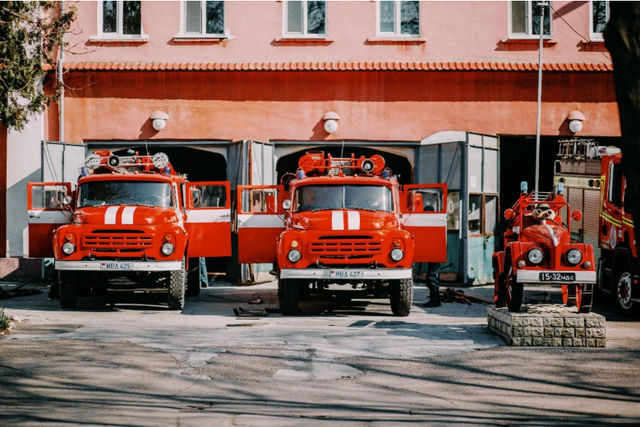
Brush trucks, often called wildland fire engines, are specialized off-road firefighting vehicles designed to suppress fires in grass, brush, and forests. These fire trucks are built for maneuverability and typically feature four-wheel drive, heavy-duty suspension, and the ability to pump water while moving.
Whether you work for the fire department or are new to Brush fire trucks, this informative article can help you. According to the National Fire Protection Association (NFPA) Standard 1901, the standard for automotive fire apparatus, Brush trucks are classified into numerous types based on their functions. This article highlights the types of Brush trucks and why you need them.
Brush Truck: Type 1
Type 1 brush trucks are among the most common trucks responding to structural fires. These trucks are especially beneficial in dense, polluted areas, with an array of ladders for reaching fires in elevated buildings.
A Type 1 brush truck can carry up to 4 firefighters and equipment such as chainsaws, circular saws, and other specialized tools, depending on the incident’s requirements.
They also have a custom pumper that can hold about 400-500 gallons of water. However, once at a fire scene, these trucks connect to a reliable water supply to meet the incident’s needs.
Brush Truck: Type 2
Type 2 brush trucks are quite similar to Type 1 trucks in functionality and in their ability to carry water and crew members comfortably. These trucks are also very common, just like Type 1, and you might have seen them most of the time whenever a fire incident occurs.
Type 2 pumpers typically carry 3 to 4 members, and common equipment includes Self-Contained Breathing Apparatus (SCBA), chainsaws, and circular saws.
Busch Truck: Type 3
Type 3 fire brush trucks are also called wildland engines. These fire trucks have Four Wheel Drive, which makes driving over rough terrain easier, and a maximum gross vehicle weight rating of over 26,000 lbs. Type 3 trucks can carry at least 500 gallons, pump 150 gallons per minute at 250 pounds per square inch, and carry 3 crew members with a pumper.
Busch Truck: Type 4
Type 4 brush trucks are also called wildland trucks because they respond to wildfires. These trucks are quite similar to Type 3 trucks. The only difference is their larger tank capacity, which can carry 750 gallons.
These trucks are used to drive over rough terrain, weigh 26000 lbs, and have a smaller pumper and hose. The standard pumping capacity is 50 gallons per minute at a pressure of 100 pounds per square inch.
Brush Truck: Type 5, Type 6, and Type 7
Types 5, 6, and 7 are typically customized to meet the distinct needs of wildland and urban settings. These trucks are smaller than Types 3 and 4 but can still carry 50 to 400 gallons of water.
Types 5 and 7 are highly suitable for initial fire suppression response and are listed in ascending order. This engine classification is designed to carry a minimum of 2 members and to carry hose diameters ranging from 1 inch to 1 ½ inch.